Published
see full video here!: ???? https://youtu.be/5EtcdFv5zj8?si=xuzA2EBF_akDx2fh
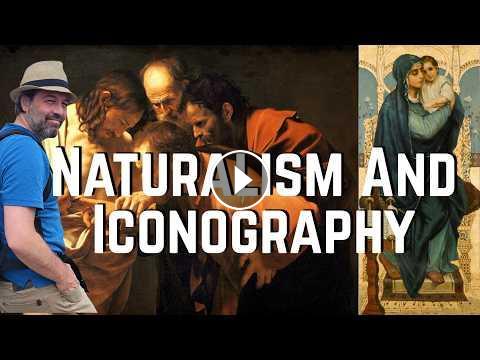
Jonathan Pageau, Andrew Gould, and Matthew Wilkinson discuss Orthodox iconography, realism, Caravaggio, sacred art, Byzantine aesthetics, church architecture, and the future of Christian beauty.
What makes an image sacred? Why do Orthodox icons look so different from the realism of the Renaissance and Baroque periods? And is there a place for artists like Caravaggio, Rubens, or the Pre-Raphaelites within the future of Christian art?
In this wide-ranging conversation, Jonathan Pageau, Andrew Gould, and Matthew Wilkinson explore the relationship between realism, symbolism, beauty, and worship. Beginning with a discussion of whether photographs are actually "realistic," the conversation unfolds into a deeper examination of how human beings experience the world, remember what they see, and represent reality through art.
The discussion challenges the common assumption that artistic progress simply means becoming more naturalistic or more photorealistic. Instead, the group examines the sophisticated visual language of Byzantine iconography, medieval art, and traditional sacred imagery, arguing that these artistic traditions often capture human experience in ways that photography cannot. They explore how icons communicate spiritual realities, why flattening and stylization matter, and what is gained—and lost—when artists pursue realism as their primary goal.
Along the way, the conversation turns to some of the greatest artists and movements in Western history. Caravaggio, Rubens, Rembrandt, the Baroque, Art Nouveau, stained glass, Tiffany windows, and the Pre-Raphaelites all become part of a broader discussion about whether Christian culture can recover a living artistic tradition capable of producing beauty in the modern world.
Jonathan and Andrew also discuss examples of contemporary Orthodox artists who are drawing creatively from both Eastern and Western traditions without abandoning the symbolic foundations of iconography. Can sacred art develop organically while remaining faithful to its purpose? Is there room for realism within liturgical art? What distinguishes an image meant for prayer from an image meant for contemplation or aesthetic appreciation?
The conversation eventually widens into a reflection on the crisis of modern aesthetics itself. From contemporary religious art to AI-generated imagery, from children's media to architecture and church design, the discussion examines how beauty shapes perception and why recovering a meaningful artistic tradition may be one of the central cultural tasks facing Christians today.
Whether you are interested in Orthodox Christianity, iconography, art history, architecture, symbolism, aesthetics, or the future of Christian culture, this episode offers a thoughtful and often surprising exploration of what sacred art is, what it is for, and where it may be headed.
If you enjoy these conversations, please consider supporting the channel, subscribing, and sharing the episode with others who care about beauty, tradition, and the renewal of Christian culture.
00:00 Why Photography Isn't Real
02:15 The Secret Behind Byzantine Icons
04:40 Can Orthodox Art Be Realistic?
07:25 The Lost Future of Christian Art
09:30 When Sacred Art Becomes Sensual
11:20 Can Caravaggio Belong in an Orthodox Church?
14:10 Why Orthodox Churches Reject Renaissance Art
16:40 Francis Bacon, Despair, and Conversion
19:30 What Christian Artists Need to Recover
22:00 Why Modern Religious Art Feels Fake
26:15 Where Sacred Art Is Headed Next\
28:50 The Case for Stained Glass
31:20 Why Modern People Can't Recognize Beauty
34:10 AI Art and the Collapse of Taste
35:15 The Paradexion Tree
Jonathan Pageau, Andrew Gould, and Matthew Wilkinson discuss Orthodox iconography, realism, Caravaggio, sacred art, Byzantine aesthetics, church architecture, and the future of Christian beauty.
What makes an image sacred? Why do Orthodox icons look so different from the realism of the Renaissance and Baroque periods? And is there a place for artists like Caravaggio, Rubens, or the Pre-Raphaelites within the future of Christian art?
In this wide-ranging conversation, Jonathan Pageau, Andrew Gould, and Matthew Wilkinson explore the relationship between realism, symbolism, beauty, and worship. Beginning with a discussion of whether photographs are actually "realistic," the conversation unfolds into a deeper examination of how human beings experience the world, remember what they see, and represent reality through art.
The discussion challenges the common assumption that artistic progress simply means becoming more naturalistic or more photorealistic. Instead, the group examines the sophisticated visual language of Byzantine iconography, medieval art, and traditional sacred imagery, arguing that these artistic traditions often capture human experience in ways that photography cannot. They explore how icons communicate spiritual realities, why flattening and stylization matter, and what is gained—and lost—when artists pursue realism as their primary goal.
Along the way, the conversation turns to some of the greatest artists and movements in Western history. Caravaggio, Rubens, Rembrandt, the Baroque, Art Nouveau, stained glass, Tiffany windows, and the Pre-Raphaelites all become part of a broader discussion about whether Christian culture can recover a living artistic tradition capable of producing beauty in the modern world.
Jonathan and Andrew also discuss examples of contemporary Orthodox artists who are drawing creatively from both Eastern and Western traditions without abandoning the symbolic foundations of iconography. Can sacred art develop organically while remaining faithful to its purpose? Is there room for realism within liturgical art? What distinguishes an image meant for prayer from an image meant for contemplation or aesthetic appreciation?
The conversation eventually widens into a reflection on the crisis of modern aesthetics itself. From contemporary religious art to AI-generated imagery, from children's media to architecture and church design, the discussion examines how beauty shapes perception and why recovering a meaningful artistic tradition may be one of the central cultural tasks facing Christians today.
Whether you are interested in Orthodox Christianity, iconography, art history, architecture, symbolism, aesthetics, or the future of Christian culture, this episode offers a thoughtful and often surprising exploration of what sacred art is, what it is for, and where it may be headed.
If you enjoy these conversations, please consider supporting the channel, subscribing, and sharing the episode with others who care about beauty, tradition, and the renewal of Christian culture.
00:00 Why Photography Isn't Real
02:15 The Secret Behind Byzantine Icons
04:40 Can Orthodox Art Be Realistic?
07:25 The Lost Future of Christian Art
09:30 When Sacred Art Becomes Sensual
11:20 Can Caravaggio Belong in an Orthodox Church?
14:10 Why Orthodox Churches Reject Renaissance Art
16:40 Francis Bacon, Despair, and Conversion
19:30 What Christian Artists Need to Recover
22:00 Why Modern Religious Art Feels Fake
26:15 Where Sacred Art Is Headed Next\
28:50 The Case for Stained Glass
31:20 Why Modern People Can't Recognize Beauty
34:10 AI Art and the Collapse of Taste
35:15 The Paradexion Tree
- Catégories
- vidéos/films
- Mots-clés
- Jonathan Pageau, Andrew Gould, Orthodox iconography

Soyez le premier à commenter cette vidéo.
Up Next
Autoplay
-
00:14

Modern art now vs art in Jesus’ time #jesus #christian #art
-
35:00
Tucker Carlson Turns to the DARK SIDE & the Nick Fuentes Problem | Jonathan Cahn Prophetic
-
1:57:58
Pageau vs Folley: Christian & atheist DEBATE Genesis, Jesus, science & faith | Uncommon Ground
-
00:13
He prefers modern art… #christian #jesus #art
-
1:02:45
CHẦU THÁNH THỂ 20:00 | LẦN CHUỖI LÒNG CHÚA THƯƠNG XÓT | NGÀY 1-9-2023 | NHÀ THỜ ĐỨC BÀ
-
00:14
Chúa Jesus Đến Thế Gian Vì Yêu Nhân Loại #shorts
-
1:11:49
Thánh Lễ Chúa Nhật Lễ Lá 2/4 dành cho những người không thể đến nhà thờ
-
00:24
Reasons to love the Lord✝️????✝️ inspo:@R3alism_official #god #christian #realism #jesus
-
3:15:59
Jonathan Pageau: Symbols, Resurrection, Incarnation, Theosis, Heaven
-
51:48
Thánh Lễ Chúa Nhật 13 Mùa Quanh Năm 02/7 dành cho những người không thể đến nhà thờ
-
27:06
JOB: PELÍCULA COMPLETA | La Historia MÁS DOLOROSA y PODEROSA de FE JAMÁS CONTADA
-
03:14

Faveur Mukoko - Enfant Chérie (Clip Officiel)
-
03:29
INDIRA - Tout Sauf La Honte (Clip Officiel)
-
2:28:32
![JOSHUA KPLE NAYA 1-2-3-4-5-6 [ Ibo Film Complet En Éwé 2023]](https://videos.chretienskabyles.com/uploads/thumbs/b369ed939-1.jpg)
JOSHUA KPLE NAYA 1-2-3-4-5-6 [ Ibo Film Complet En Éwé 2023]
-
2:05:53
Le Pasteur et la Prostituée. FILM CHRÉTIEN
-
1:13:43
LA VOLONTÉ DE DIEU DANS LE CHOIX D'UN CONJOINT/FILM CHRÉTIENS 2023/COMPLET EN FRANÇAIS
-
11:22
UNE FEMME RICHE ACHÈTE UN SANS-ABRI
-
1:16:52
????GOD SAYS : I AM HEALING YOU TONIGHT.I WANT TO GIVE YOU $50,000,000,000 MONEY INTO YOUR BANK ACCO
-
2:04:14
JEUDI 03 OCTOBRE 2024 à Bujumbura, Fr ALBERT NUMBI KAPEMBA
-
26:51

Film ibo ewe MAWU SUBƆSUBƆDƆ 1-2 ( abonné vous que tu peux voir numéro 3-4