Published
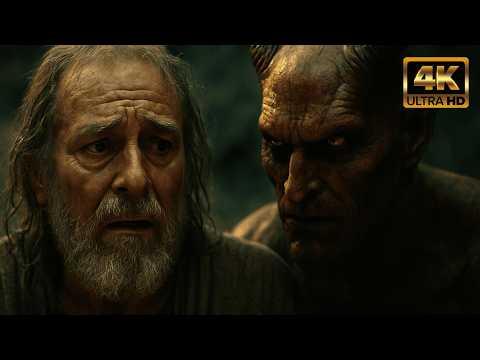
The video presents the life of Abraham, a central figure in the development of monotheism and a foundational patriarch in the histories of Judaism, Christianity, and Islam. Drawing from biblical texts, ancient traditions, and historical context, the narrative traces Abraham's journey from the city of Ur in Mesopotamia, where moon worship and polytheism dominated, to the land of Canaan, where a covenant with a single God would set the course for spiritual history. Born into a world of temples, idols, and regional gods, Abraham—originally Abram—emerges from a family that maintained traditional forms of worship. His father, Terah, is described as a craftsman and caretaker of idols, rooted in the Mesopotamian religious landscape that included gods like Nanna, Ishtar, and Shamash.
The story follows Abram's departure from Ur, along with his wife Sarai and nephew Lot, first to Haran and then toward Canaan. The biblical account attributes this migration to a divine encounter: God appeared to Abram and instructed him to leave his homeland, promising to make him into a great nation. The narrative emphasizes the cultural and spiritual break Abram made by turning from household gods to the worship of a single, unseen deity. Throughout the journey, the developing covenant between God and Abraham is marked by significant events such as the building of altars, divine promises of land and descendants, and the rejection of material gain from local kings to preserve the purity of divine provision.
Key episodes include Abraham's sojourn in Egypt during a famine, where he presents Sarai as his sister to protect himself, and the separation from Lot, who chooses the fertile plains of the Jordan. The rescue of Lot from invading eastern kings introduces Melchizedek, the priest-king of Salem, who blesses Abraham and establishes a precedent for priesthood and divine acknowledgment. The narrative also includes the prophetic covenant scene where Abraham is shown the future of his descendants, their enslavement in Egypt, and their eventual return.
The story continues with the birth of Ishmael through Hagar, Sarai's Egyptian maidservant, followed by the divine reaffirmation of the covenant through the rite of circumcision. At this point, Abram’s name is changed to Abraham, and Sarai becomes Sarah. The birth of Isaac is promised, despite their old age. God’s promise is fulfilled, and Isaac is born, marking the continuation of the covenant lineage. The text explores the tension between Ishmael and Isaac, leading to Hagar and Ishmael’s expulsion into the desert, where God also promises to make a great nation of Ishmael’s descendants.
The narrative reaches a theological climax with the binding of Isaac, where Abraham is instructed to offer his son as a sacrifice. This event becomes a defining moment of faith and obedience, interpreted in later traditions as the ultimate test of Abraham’s loyalty. The account includes the death of Sarah and the purchase of the cave of Machpelah, the only land Abraham officially owns in Canaan, highlighting the beginnings of Israelite settlement in the promised land.
The final sections detail the arrangement of a wife for Isaac, emphasizing Abraham’s insistence that Isaac not return to Mesopotamia but remain in the land of promise. The servant’s journey and meeting with Rebekah fulfill this requirement. Abraham's later years include a second marriage to Keturah, the birth of additional sons, and the deliberate passing of the covenant to Isaac. Abraham’s death brings Isaac and Ishmael together to bury him beside Sarah, concluding the narrative with the continuity of the covenant and Abraham’s lasting impact on religious and cultural history.
The video uses keywords and themes relevant to biblical history, Abraham in the Bible, monotheism origins, Genesis explained, covenant theology, Old Testament figures, ancient Mesopotamian religion, and the patriarchal narratives central to the Abrahamic religions.
The story follows Abram's departure from Ur, along with his wife Sarai and nephew Lot, first to Haran and then toward Canaan. The biblical account attributes this migration to a divine encounter: God appeared to Abram and instructed him to leave his homeland, promising to make him into a great nation. The narrative emphasizes the cultural and spiritual break Abram made by turning from household gods to the worship of a single, unseen deity. Throughout the journey, the developing covenant between God and Abraham is marked by significant events such as the building of altars, divine promises of land and descendants, and the rejection of material gain from local kings to preserve the purity of divine provision.
Key episodes include Abraham's sojourn in Egypt during a famine, where he presents Sarai as his sister to protect himself, and the separation from Lot, who chooses the fertile plains of the Jordan. The rescue of Lot from invading eastern kings introduces Melchizedek, the priest-king of Salem, who blesses Abraham and establishes a precedent for priesthood and divine acknowledgment. The narrative also includes the prophetic covenant scene where Abraham is shown the future of his descendants, their enslavement in Egypt, and their eventual return.
The story continues with the birth of Ishmael through Hagar, Sarai's Egyptian maidservant, followed by the divine reaffirmation of the covenant through the rite of circumcision. At this point, Abram’s name is changed to Abraham, and Sarai becomes Sarah. The birth of Isaac is promised, despite their old age. God’s promise is fulfilled, and Isaac is born, marking the continuation of the covenant lineage. The text explores the tension between Ishmael and Isaac, leading to Hagar and Ishmael’s expulsion into the desert, where God also promises to make a great nation of Ishmael’s descendants.
The narrative reaches a theological climax with the binding of Isaac, where Abraham is instructed to offer his son as a sacrifice. This event becomes a defining moment of faith and obedience, interpreted in later traditions as the ultimate test of Abraham’s loyalty. The account includes the death of Sarah and the purchase of the cave of Machpelah, the only land Abraham officially owns in Canaan, highlighting the beginnings of Israelite settlement in the promised land.
The final sections detail the arrangement of a wife for Isaac, emphasizing Abraham’s insistence that Isaac not return to Mesopotamia but remain in the land of promise. The servant’s journey and meeting with Rebekah fulfill this requirement. Abraham's later years include a second marriage to Keturah, the birth of additional sons, and the deliberate passing of the covenant to Isaac. Abraham’s death brings Isaac and Ishmael together to bury him beside Sarah, concluding the narrative with the continuity of the covenant and Abraham’s lasting impact on religious and cultural history.
The video uses keywords and themes relevant to biblical history, Abraham in the Bible, monotheism origins, Genesis explained, covenant theology, Old Testament figures, ancient Mesopotamian religion, and the patriarchal narratives central to the Abrahamic religions.
- Catégories
- vidéos/films
- Mots-clés
- bible story, bible stories, bible videos

Soyez le premier à commenter cette vidéo.
Up Next
Autoplay
-
1:41:50

Mary (2024) | Full Biblical Epic | Noa Cohen, Anthony Hopkins |Hollywood Movie, Full English Movie
-
56:30
The Book of Job | Full Christian Movie - Complete Biblical Movie 4K
-
44:39
MOSES – The Movie (2026): The MOVIE that Shocked the World | Complete Full Biblical Movie 4K
-
57:37
The Complete Story of Jesus’ Death | Full Biblical Movie
-
57:43
The Complete Story of Abraham: Father of Nations! (Full Movie)
-
2:48:05
ABRAHAM Le Film Complet En Français film complet en français abraham film abraham en francais
-
1:03:05
Genesis 2025 – The Complete Story of Adam, Noah, Abraham & Joseph | Full Bible Movie 4K
-
49:10
Story of Abraham | Complete Animated Bible Movie
-
1:50:07
The BIBLE MOVIE (2026) | The Complete Story From Genesis Movie To Revelation | Full Movie 4k
-
1:17:24
New movie full movie 2025 | the passion of the christ movie full English movie| English full movie
-
27:06
JOB: PELÍCULA COMPLETA | La Historia MÁS DOLOROSA y PODEROSA de FE JAMÁS CONTADA
-
03:14

Faveur Mukoko - Enfant Chérie (Clip Officiel)
-
03:29

INDIRA - Tout Sauf La Honte (Clip Officiel)
-
2:28:32
![JOSHUA KPLE NAYA 1-2-3-4-5-6 [ Ibo Film Complet En Éwé 2023]](https://videos.chretienskabyles.com/uploads/thumbs/b369ed939-1.jpg)
JOSHUA KPLE NAYA 1-2-3-4-5-6 [ Ibo Film Complet En Éwé 2023]
-
2:05:53

Le Pasteur et la Prostituée. FILM CHRÉTIEN
-
1:13:43

LA VOLONTÉ DE DIEU DANS LE CHOIX D'UN CONJOINT/FILM CHRÉTIENS 2023/COMPLET EN FRANÇAIS
-
11:22

UNE FEMME RICHE ACHÈTE UN SANS-ABRI
-
1:16:52

????GOD SAYS : I AM HEALING YOU TONIGHT.I WANT TO GIVE YOU $50,000,000,000 MONEY INTO YOUR BANK ACCO
-
2:04:14

JEUDI 03 OCTOBRE 2024 à Bujumbura, Fr ALBERT NUMBI KAPEMBA
-
26:51

Film ibo ewe MAWU SUBƆSUBƆDƆ 1-2 ( abonné vous que tu peux voir numéro 3-4
