Published
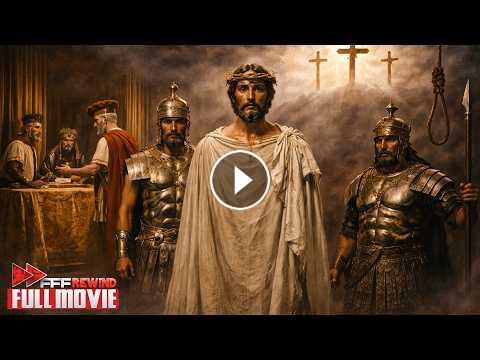
Fans of King Of Kings, The Robe, Ben-Hur, The Ten Commandments, and Quo Vadis cannot miss this Biblical epic movie, that frames the foundational narrative of the Christian faith through the perspective of Simon Peter as he awaits execution in a Roman prison.
The story unfolds as Simon Peter provides spiritual counsel to a young fellow prisoner who is paralyzed by the fear of impending martyrdom. Through a series of evocative flashbacks, Peter recounts his personal journey from a humble fisherman to the rock of the early church, emphasizing his moments of profound weakness, including his thrice-fold denial of Christ following the arrest in Gethsemane.
The narrative meticulously retraces the pivotal events of the Passion week, encompassing the Last Supper, the trial before the Sanhedrin, the agony of the crucifixion, and the transformative wonder of the resurrection and subsequent ascension. By sharing his own transition from cowardice to conviction, Peter demonstrates how the living spirit of Christ provides the fortitude necessary to face earthly persecution with eternal hope.
The film functions as a mid-century religious biopic and a faith-based drama, specifically utilizing the framing device of the testimony to bridge the gap between biblical antiquity and the psychological interiority of its characters. Director Harold Schuster, known for his efficient and visually clear storytelling in films like My Friend Flicka, brings a sincere, unadorned quality to the production that differentiates it from the bombastic spectacle of contemporary Hollywood epics. Richard Kiley delivers a nuanced and authoritative performance as Saint Peter, capturing the character’s internal conflict and ultimate spiritual resolution, while Jon Shepodd provides a gentle, iconic portrayal of Jesus. The primary themes center on the redemptive nature of forgiveness and the paradox of finding strength within vulnerability. Unlike the action-heavy sub-genres of the era, Schuster’s work prioritizes the theological implications of the resurrection, treating the narrative as a pedagogical tool for spiritual endurance rather than a mere historical reenactment.
Historically, Power Of The Resurrection occupies a significant niche within the late 1950s trend of biblical cinema, produced by Family Films, a studio dedicated to creating high-quality religious content for church and television distribution. This specific production arrived during the peak of the Cold War, a time when American cinema often utilized religious themes to reinforce traditional values and social cohesion. Schuster, having previously worked under the tutelage of legendary figures like F.W. Murnau and John Ford as an editor, applied a disciplined sense of pacing and composition to the film's 58-minute runtime. The lead actors brought significant prestige to the project; Richard Kiley was already an established Broadway star and television veteran, while Morris Ankrum was a ubiquitous character actor whose presence lent the Sanhedrin scenes a gravity familiar to audiences of 1950s cinema.
Technically, the film is notable for its use of Technicolor, which provides a vibrant, saturated palette that heightens the emotional resonance of the biblical settings without the astronomical costs of the widescreen spectacles produced by major studios like MGM or Cecil B. DeMille’s Paramount.
Power Of The Resurrection (1958)
Genre: Historical, Drama
© 2026 Legend Films. Published under license.
We secure AVOD rights for the greatest old school retro movies and masterpieces of the Seventh Art to provide you with a 100% FREE full-length timeless entertainment experience on YouTube!
SUBSCRIBE HERE: https://t.ly/Cygm7
SHARE - LIKE - FOLLOW
Partner your channel with the #1 Movie-themed YouTube network:
https://www.greaterfool.tv
???? Watch heartwarming wholesome films with a positive message: https://t.ly/9fh9l
???? Watch more Great Full-Length Movies here: https://t.ly/L2f7u
???? Join the Community and discuss our top stories and adventures: https://t.ly/_-dXW
????️ Watch legendary black and white movies from the Golden Age of Hollywood: https://t.ly/NrRst
The story unfolds as Simon Peter provides spiritual counsel to a young fellow prisoner who is paralyzed by the fear of impending martyrdom. Through a series of evocative flashbacks, Peter recounts his personal journey from a humble fisherman to the rock of the early church, emphasizing his moments of profound weakness, including his thrice-fold denial of Christ following the arrest in Gethsemane.
The narrative meticulously retraces the pivotal events of the Passion week, encompassing the Last Supper, the trial before the Sanhedrin, the agony of the crucifixion, and the transformative wonder of the resurrection and subsequent ascension. By sharing his own transition from cowardice to conviction, Peter demonstrates how the living spirit of Christ provides the fortitude necessary to face earthly persecution with eternal hope.
The film functions as a mid-century religious biopic and a faith-based drama, specifically utilizing the framing device of the testimony to bridge the gap between biblical antiquity and the psychological interiority of its characters. Director Harold Schuster, known for his efficient and visually clear storytelling in films like My Friend Flicka, brings a sincere, unadorned quality to the production that differentiates it from the bombastic spectacle of contemporary Hollywood epics. Richard Kiley delivers a nuanced and authoritative performance as Saint Peter, capturing the character’s internal conflict and ultimate spiritual resolution, while Jon Shepodd provides a gentle, iconic portrayal of Jesus. The primary themes center on the redemptive nature of forgiveness and the paradox of finding strength within vulnerability. Unlike the action-heavy sub-genres of the era, Schuster’s work prioritizes the theological implications of the resurrection, treating the narrative as a pedagogical tool for spiritual endurance rather than a mere historical reenactment.
Historically, Power Of The Resurrection occupies a significant niche within the late 1950s trend of biblical cinema, produced by Family Films, a studio dedicated to creating high-quality religious content for church and television distribution. This specific production arrived during the peak of the Cold War, a time when American cinema often utilized religious themes to reinforce traditional values and social cohesion. Schuster, having previously worked under the tutelage of legendary figures like F.W. Murnau and John Ford as an editor, applied a disciplined sense of pacing and composition to the film's 58-minute runtime. The lead actors brought significant prestige to the project; Richard Kiley was already an established Broadway star and television veteran, while Morris Ankrum was a ubiquitous character actor whose presence lent the Sanhedrin scenes a gravity familiar to audiences of 1950s cinema.
Technically, the film is notable for its use of Technicolor, which provides a vibrant, saturated palette that heightens the emotional resonance of the biblical settings without the astronomical costs of the widescreen spectacles produced by major studios like MGM or Cecil B. DeMille’s Paramount.
Power Of The Resurrection (1958)
Genre: Historical, Drama
© 2026 Legend Films. Published under license.
We secure AVOD rights for the greatest old school retro movies and masterpieces of the Seventh Art to provide you with a 100% FREE full-length timeless entertainment experience on YouTube!
SUBSCRIBE HERE: https://t.ly/Cygm7
SHARE - LIKE - FOLLOW
Partner your channel with the #1 Movie-themed YouTube network:
https://www.greaterfool.tv
???? Watch heartwarming wholesome films with a positive message: https://t.ly/9fh9l
???? Watch more Great Full-Length Movies here: https://t.ly/L2f7u
???? Join the Community and discuss our top stories and adventures: https://t.ly/_-dXW
????️ Watch legendary black and white movies from the Golden Age of Hollywood: https://t.ly/NrRst
- Catégories
- vidéos/films
- Mots-clés
- classic movies for free, vintage movies, retro movies

Soyez le premier à commenter cette vidéo.
Up Next
Autoplay
-
1:17:24

New movie full movie 2025 | the passion of the christ movie full English movie| English full movie
-
1:41:50
Mary (2024) | Full Biblical Epic | Noa Cohen, Anthony Hopkins |Hollywood Movie, Full English Movie
-
00:51
How epic would it be? #epic #jesus #jesusisking #christian
-
22:29
New ‘Daniel and the Fiery Furnace’ Movie Brings Biblical Epic Back to Theaters | Faith in Culture
-
1:28:02
Moses and the Pharaohs Fury Full Movie 2026 in 4K Biblical Epic
-
31:36
HOLY WEEK REIMAGINED ???? | Jesus, Peter, John & Judas | Epic Biblical Film
-
30:45
Daniel (2026) - FULL MOVIE 4K | Epic Biblical Drama
-
4:38:44
Moses & Joshua — From Egypt to the Promised Land (Full Biblical Epic Movie)
-
27:13
Passion of Christ Full Movie | FULL Holy Week MOVIE Journey from Palm Sunday to Resurrection
-
46:12
GENESIS: From Heaven to Earth | Full Biblical Epic
-
27:06
JOB: PELÍCULA COMPLETA | La Historia MÁS DOLOROSA y PODEROSA de FE JAMÁS CONTADA
-
03:14

Faveur Mukoko - Enfant Chérie (Clip Officiel)
-
03:29

INDIRA - Tout Sauf La Honte (Clip Officiel)
-
2:28:32
![JOSHUA KPLE NAYA 1-2-3-4-5-6 [ Ibo Film Complet En Éwé 2023]](https://videos.chretienskabyles.com/uploads/thumbs/b369ed939-1.jpg)
JOSHUA KPLE NAYA 1-2-3-4-5-6 [ Ibo Film Complet En Éwé 2023]
-
2:05:53
Le Pasteur et la Prostituée. FILM CHRÉTIEN
-
1:13:43
LA VOLONTÉ DE DIEU DANS LE CHOIX D'UN CONJOINT/FILM CHRÉTIENS 2023/COMPLET EN FRANÇAIS
-
11:22

UNE FEMME RICHE ACHÈTE UN SANS-ABRI
-
1:16:52
????GOD SAYS : I AM HEALING YOU TONIGHT.I WANT TO GIVE YOU $50,000,000,000 MONEY INTO YOUR BANK ACCO
-
2:04:14
JEUDI 03 OCTOBRE 2024 à Bujumbura, Fr ALBERT NUMBI KAPEMBA
-
26:51

Film ibo ewe MAWU SUBƆSUBƆDƆ 1-2 ( abonné vous que tu peux voir numéro 3-4